The lawyer’s office smelled of mahogany and old money—the kind of smell my father loved. We sat on opposite sides of the room. Julian, wearing a suit that cost more than my car, looked bored. I sat stiffly, clutching my purse, waiting for the final judgment.
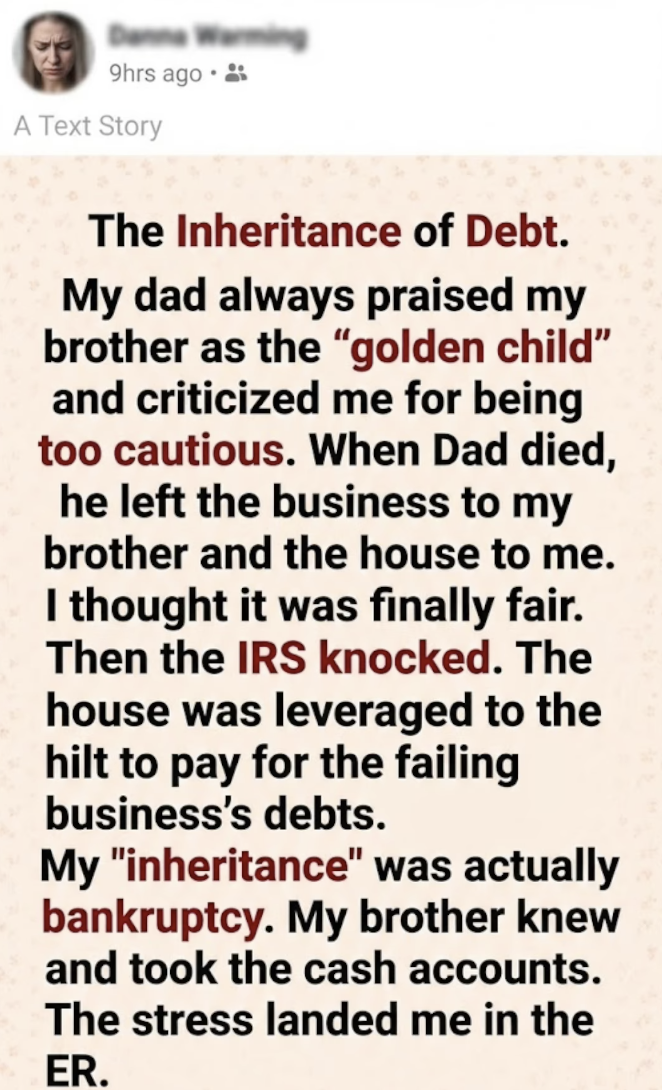
For thirty years, the dynamic had been set in stone. Julian was the visionary, the risk-taker, the “golden child”. I was the accountant, the buzzkill, the one criticized me for being too cautious. Dad loved Julian’s bravado; he merely tolerated my prudence.
Mr. Henderson cleared his throat and began reading.
“To my son, Julian, I leave the family business, Sterling Industries, and all associated operational assets.”
Julian smirked. Of course. The crown jewel for the prince.
“To my daughter, Elena,” Henderson continued, “I leave the family estate on Oak Creek Drive.”
I blinked. The house? The sprawling, Victorian mansion where we grew up? It was worth millions. For the first time in my life, I looked at Julian and didn’t feel a pang of envy. He got the work, and I got the home. I thought it was finally fair. I even smiled at him. He didn’t smile back. He just checked his watch.
Two weeks later, I was standing in the foyer of my house, planning renovations, when the doorbell rang.
It wasn’t a contractor. It was two agents from the Internal Revenue Service.
They didn’t waste time with pleasantries. They laid the paperwork out on the antique dining table. As I read, the room began to spin.
The house wasn’t an asset. It was collateral.
Over the last five years, as Julian’s “visionary” ideas had bled the business dry, my father hadn’t cut costs. He had secretly taken out loan after loan against the house to keep Sterling Industries afloat. The house was leveraged to the hilt to pay for the failing business’s debts.
“Ms. Sterling,” the agent said, his voice devoid of sympathy. “The liens exceed the property value by three million dollars. We are initiating seizure proceedings.”
I couldn’t breathe. I called Julian. He answered on the first ring, sounding cheerful.
“You knew,” I whispered.
“I knew the business needed a restart,” Julian said smoothly. “Dad wanted to make sure I had a clean slate. That’s why the liquid cash accounts were transferred to me separately. It’s just business, El. You’re smart; you’ll figure it out.”
He hung up.
My knees hit the floor. My “inheritance” was actually bankruptcy. Dad hadn’t given me a home; he had given me his debt so his golden boy could walk away debt-free. My brother knew and took the cash accounts, leaving me to hold the bag for their failures.
The room went black.
I woke up to the rhythmic beeping of a heart monitor. The stress landed me in the ER. The doctor told me it was a panic-induced cardiac event.
Lying in the hospital bed, stripped of my inheritance, my credit score, and my family, I realized the caution my father despised was the only thing I had left. I closed my eyes and made a vow: Julian had the money, but I had the truth. And unlike the business, the truth was something he couldn’t bankrupt.