Elena was the sensible one. Everyone said so. When her mother’s diagnosis came, Elena didn’t crumble; she bought a three-ring binder.
She color-coded the medical records. She organized the finances. She pre-selected the hymns for the service and even helped her mother write the obituary while they sat on the sun porch, drinking tea as if they were planning a vacation rather than a departure.
“You’re so prepared,” her aunt had whispered at the funeral, squeezing Elena’s shoulder. “I don’t know how you do it.”
Elena believed it, too. She thought she had done the work. She thought that by staring the inevitable in the face for six months, she had inoculated herself against the pain. She thought she was ready.
But three weeks after the funeral, standing in the middle of a grocery store aisle staring at a jar of pickles, Elena realized that the binder was useless.
She was looking for the specific brand her mother used to buy—the ones they used for the holiday potato salad. She reached for the jar, and suddenly, her hand froze. A thought, cold and sharp, pierced through her: I don’t know how to be in this world without her.
The binder had sections for “Insurance” and “Probate.” It didn’t have a section for “Who do I call when I get a promotion?” or “Who is going to tell me I’m overcooking the roast?”
She abandoned her cart and walked out to her car, sitting in the silence of the parking lot.
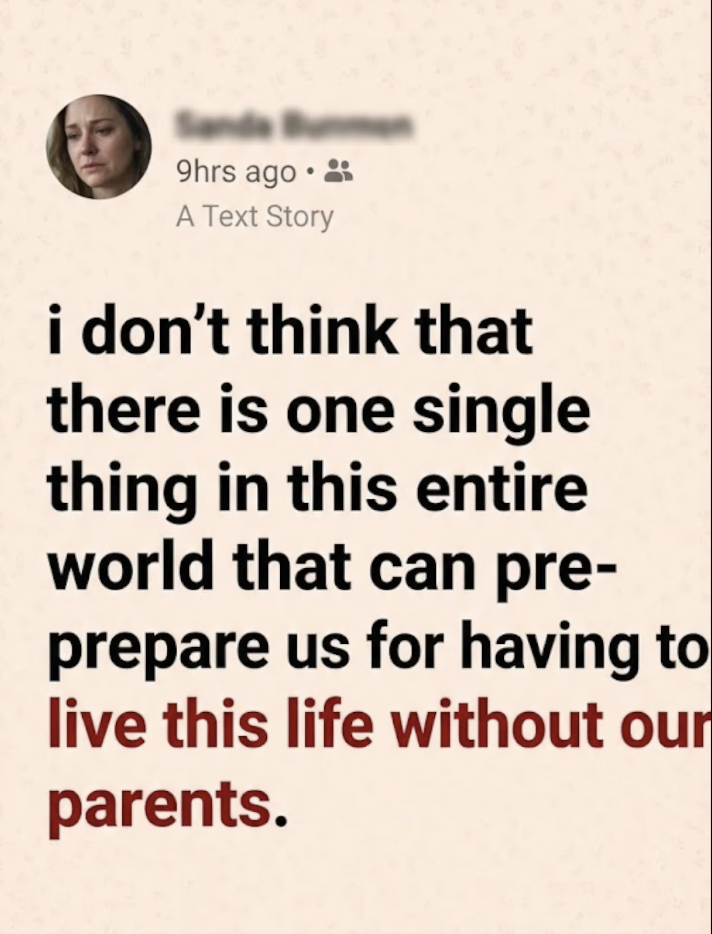
The text she had seen online was right: i don’t think that there is one single thing in this entire world that can pre-prepare us for having to live this life without our parents.
She had prepared for the death. She had prepared for the event. But she hadn’t prepared for the life that came after.
She realized that parents act as a buffer between us and the abyss. Even when we are adults, paying our own bills and raising our own children, they are the ceiling, the safety net, the North Star. When they are gone, you are suddenly standing on a cliff edge with nothing above you but the sky.
Elena looked at her phone. She had an instinct to call her mom to tell her about the panic attack in the grocery store. The realization that she couldn’t—that the one person who could soothe the fear was the source of it—made her gasp for air.
She drove home and walked into her kitchen. The binder was still sitting on the counter, full of completed tasks and checked boxes. She shoved it into a drawer.
She made a cup of tea, sat on the floor, and finally, truly, let herself cry. She cried for the loss of the safety net. She cried because she was forty years old and felt like an abandoned child. She cried because she finally understood that you can prepare for the logistics of the end, but you can never study for the heartbreak of the new beginning.
She was living the life she had dreaded, and she had to learn how to walk through it, one unprepared step at a time.