For six months, the piano in the corner of the living room had been nothing more than a shelf for unopened mail and sympathy cards. It was a Steinway, dark and imposing, and it had been Marcus’s voice. When he played, the house didn’t just have sound; it had a heartbeat.
Since the accident, Clara hadn’t touched the keys. She hadn’t touched much of anything, really. She went to work, she came home, she stared at the walls. She was existing in a greyscale world, convinced that enjoying anything—a sunset, a good meal, a melody—would be a betrayal of the husband who could no longer enjoy it with her.
Her sister, Sarah, came over on a rainy Tuesday. She didn’t bring a casserole this time. She brought two tickets to a jazz festival in New Orleans.
“We’re going,” Sarah said, slapping them on the counter.
“I can’t,” Clara replied, her voice flat. “Marcus loved jazz. It feels wrong to go without him.”
“That is exactly why it is wrong to stay here,” Sarah said gently. She pulled a folded piece of paper from her purse. “I found this in his sheet music binder. He wrote it on a sticky note. I don’t know when, but… I think you need to see it.”
Clara took the note. It was Marcus’s messy scrawl, likely a lyric idea he had jotted down during a late-night session.
Don’t let the music stop just because the player changes, it read. Play it louder so the back row can hear it.
Clara looked at the piano. She had been treating her grief like a library—a place of silence and reverence. But Marcus hadn’t lived like a library. He lived like a festival.
She went to New Orleans.
The first night was excruciating. The air smelled of sugar and humidity, and the brass bands on Frenchman Street were so loud they rattled her ribs. She felt the familiar guilt creeping in—the voice that whispered, He should be here.
But then, a trumpet player hit a high note, a piercing, joyous scream of a sound that cut through the humid air. Clara looked up at the night sky. It was vast and endless.
She realized then that shrinking her life didn’t bring him closer. It pushed him further away, fading him into the background of her depression. If she wanted to feel him, she had to go where the life was.
She grabbed Sarah’s hand and pulled her into the crowd. For the first time in half a year, Clara danced. She laughed until her sides ached. She ate beignets covered in too much powdered sugar. She let the world in.
She wasn’t forgetting him. It was the opposite. With every spin, with every laugh, she felt a tether tightening, connecting her back to him.
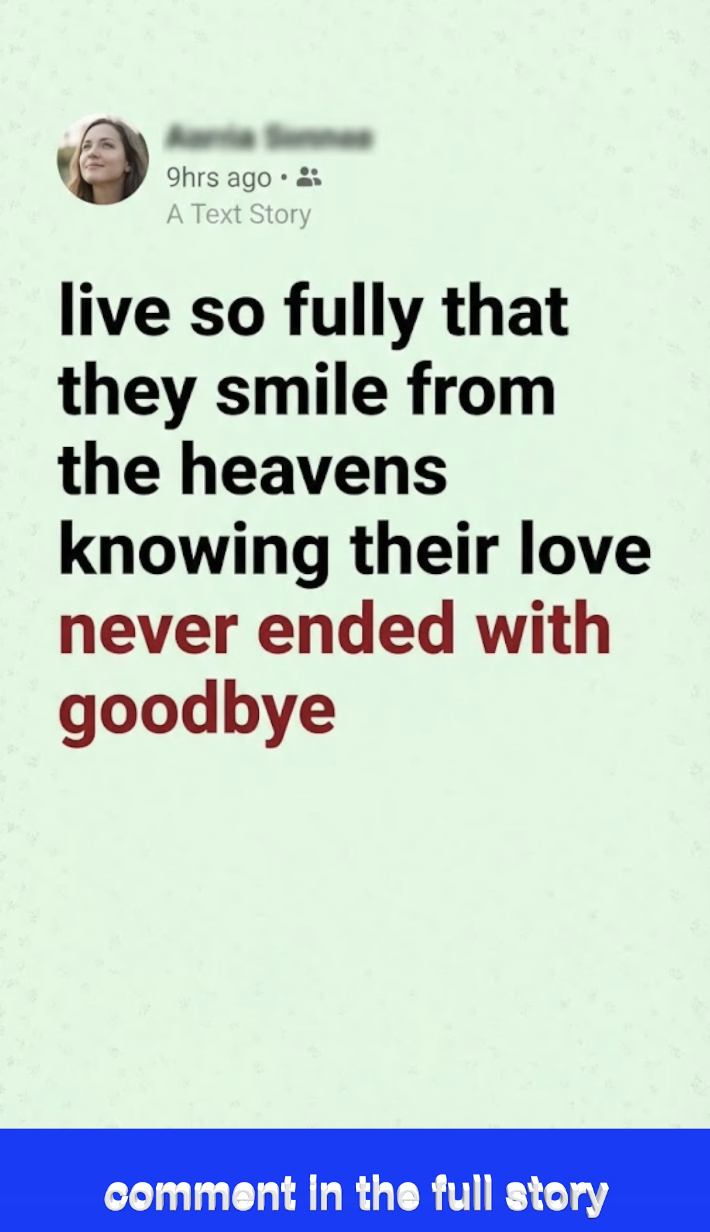
Live so fully that they smile from the heavens, the text had said. And as Clara spun under the streetlights, breathless and alive, she imagined Marcus looking down, not with envy, but with pride. She was finally playing the music loud enough for the back row.
She realized that knowing their love never ended with goodbye didn’t mean sitting in the dark holding onto the past. It meant taking that love and using it as fuel to burn brighter than before.
When she got home days later, the first thing she did was clear the mail off the piano. She sat down, lifted the lid, and played. It wasn’t a sad song. It was a boogie-woogie, fast and complex and full of life.
And for the first time, the house didn’t feel empty. It felt like an audience of one was listening, smiling from the balcony.