The alarm clock didn’t ring, but Maya was already awake. She had been staring at the ceiling for an hour, negotiating with gravity.
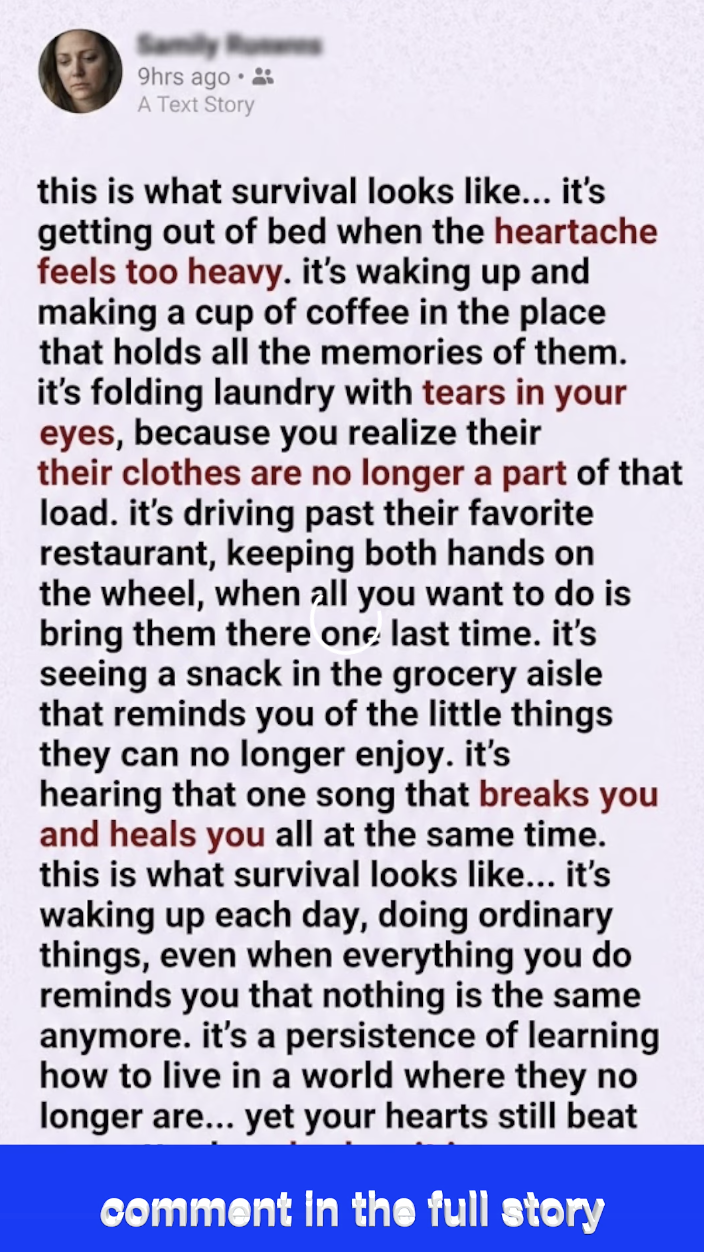
The text she had read once said that survival is getting out of bed when the heartache feels too heavy. It wasn’t a poetic heaviness; it was physical, like wearing a lead vest. But she swung her legs over the edge anyway. That was the first victory of the day.
She walked into the kitchen, the tiles cold against her bare feet. The morning light was hitting the oak table exactly the way it always did, indifferent to the fact that the person who refinished that table was gone. She went through the motions of waking up and making a cup of coffee in the place that holds all the memories. Every corner had a ghost. The dent in the fridge from when he moved it. The mug he chipped but refused to throw away. She drank the coffee black, not because she liked it, but because the routine was the only thing holding her upright.
By noon, the house was too quiet, so she started on the chores. She dumped the basket onto the bed to sort the whites from the colors. Her hands moved automatically until they stopped, hovering over a pile that looked too small.
The tears came then—sudden and sharp. It was just laundry, she told herself. But it wasn’t. It’s folding laundry with tears in your eyes, because you realize their clothes are no longer a part of that load. There were no large flannel shirts to fold. No mismatched socks to pair. The reduction in volume was a violent reminder of the reduction in her life.
She needed to get out. She grabbed her keys and drove, aiming for the grocery store, but the car seemed to have a memory of its own. She found herself driving past their favorite restaurant, keeping both hands on the wheel. Her knuckles were white. The urge to turn in, to walk to “their” booth, was magnetic. All you want to do is bring them there one last time, just to share a plate of fries and hear that laugh again. But she kept driving.
The grocery store was a minefield. She avoided the snack aisle for ten minutes, but eventually, she had to turn down it. And there they were—the spicy peanuts he was addicted to. It’s seeing a snack in the grocery aisle that reminds you of the little things they can no longer enjoy. She reached out, almost grabbing a bag out of habit, then pulled her hand back as if burned.
On the drive home, the radio betrayer her. The opening chords of “Landslide” drifted out of the speakers. It was the song they had listened to on that long road trip out West. It was the sound of a happier time. She didn’t turn it off. She let it wash over her, letting the melody tear her apart and stitch her back together. It was that one song that breaks you and heals you all at the same time.
Maya pulled into the driveway as the sun began to set. She was exhausted, not from exertion, but from the sheer effort of existing.
This is what survival looks like, she thought, unlocking the front door. It wasn’t climbing mountains or fighting battles. It’s waking up each day, doing ordinary things. It was making coffee. It was folding a smaller load of laundry. It was the persistence of learning how to live in a world where they no longer are.
She placed her hand over her chest. It was steady. Rhythmic. Despite the heaviness, despite the silence of the house, her heart still beat. And for today, that was enough.