This setup is the peak of “malicious compliance.” It plays on the satisfying trope of an unappreciated benefactor who finally decides to stop being a doormat.
Here is the long-form story based on this hook:
Part 1: The “Image” Problem
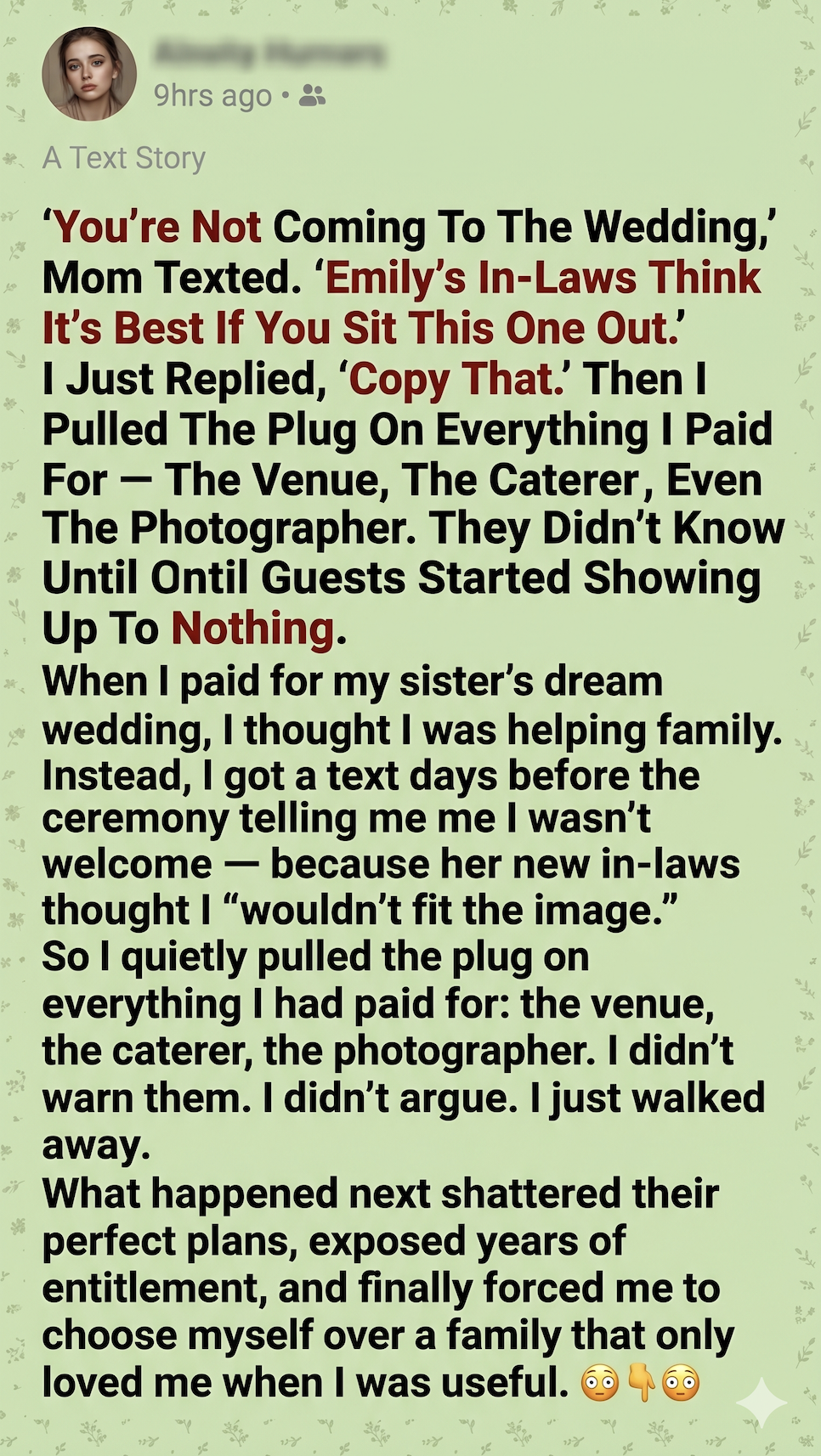
For a year, I was the “ATM” brother. My sister Emily wanted a high-society wedding to impress her new, wealthy in-laws, but our parents were broke. I’d spent $45,000—my entire house down payment—to make it happen. I didn’t care; I loved her.
Then came the text from Mom: “You’re not coming to the wedding. Emily’s in-laws are very traditional, and they think it’s best if you sit this one out. Your ‘lifestyle’ doesn’t fit the image they’re projecting for the merger. We’ll send you photos!”
My “lifestyle” was just being a blue-collar guy who worked long hours to pay for their caviar. I didn’t get angry. I didn’t call to plead. I just typed two words: “Copy that.”
Part 2: The Silent Cancellation
I spent the next four hours on the phone. Since every single contract was in my name and paid with my card, the vendors only answered to me.
-
The Venue: I invoked the emergency cancellation clause.
-
The Caterer: I told them to donate the food to a local shelter.
-
The Photographer: I paid his “kill fee” and told him to take the day off.
I didn’t stop there. I called the rental company and had the chairs, the linens, and the flower arches picked up. By sunset, the “dream venue” was just an empty, locked ballroom.
Part 3: The Arrival at Nothing
On the day of the wedding, I went to the beach. I turned off my phone and left it in the glove box.
While I was watching the waves, three busloads of “high-society” guests were pulling up to a locked gate at a historic manor. There was no music. No staff. No champagne. Just a sign on the door that read: “Event Canceled by Contract Holder.”
Emily was reportedly in her dress, standing in the parking lot, screaming that there must be a mistake. Her “image-conscious” in-laws were forced to stand in the heat while the wealthy guests they were trying to impress began to whisper about “fraud” and “unpaid bills.”
Part 4: The Fallout
When I finally turned my phone back on, I had 114 missed calls and a string of texts that went from confused to abusive to “please help us.”
My mom’s last text was the most telling: “How could you do this to your sister? You’ve ruined her life! The in-laws are calling off the business merger because they think we’re scammers!”
I replied: “If I didn’t ‘fit the image’ for the wedding, I figured my money didn’t fit the image for the bills. I took your advice and sat this one out. Hope the photos look great.”
Part 5: The New Beginning
Emily’s marriage didn’t last six months. Turns out, when you build a relationship on a foundation of fake wealth and excluding the people who actually care about you, it crumbles pretty fast.
I, however, got 80% of my money back through the cancellation refunds. I bought a small cottage three hours away from any of them. Every year on the anniversary of that “wedding,” I host a massive BBQ for my actual friends—the people who like my “image” just the way it is.
Moral of the story: If you’re going to treat someone like they’re invisible, don’t be surprised when their support disappears too.