I sat on the porch with my grandfather, watching the rain hit the pavement. He was scrolling through his phone—a new habit he’d picked up—when he suddenly stopped and frowned.
“Why do people do this?” he asked, tilting the screen toward me. It was a comment section on a news article. Strangers were tearing each other apart, insulting appearance, intelligence, and character over a simple difference of opinion.
“It’s just the internet, Grandpa,” I shrugged. “People say whatever they want because they’re anonymous.”
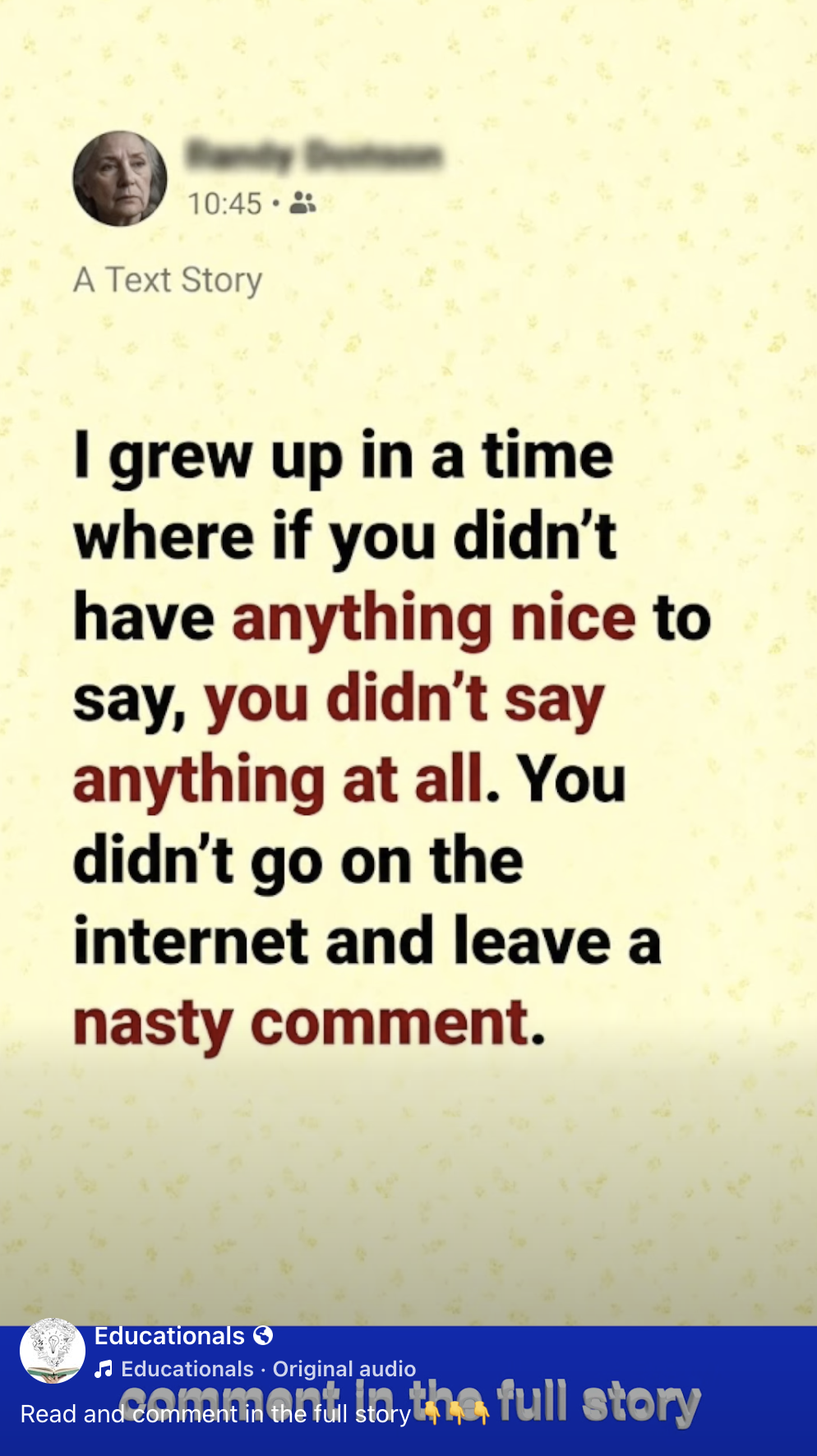
He shook his head slowly, setting the phone down as if it were heavy. “You know,” he started, looking out at the rain, “when I was your age, we had disagreements. Plenty of them. But we didn’t have a screen to hide behind. If you had something nasty to say to a man, you had to look him in the eye to say it.”
He leaned back in his chair. “And you know what happened? You realized that half the time, it wasn’t worth saying. You saw the other person was just a human being, tired and trying their best, same as you. We learned the discipline of silence. We learned that if you couldn’t offer kindness, you offered nothing at all. That wasn’t weakness; it was dignity.”
He picked up the phone again, looking at the angry comments one last time before turning the screen off.
“It’s easy to be cruel when you don’t have to watch the light go out of someone’s eyes,” he said quietly. “But just because you can say it, doesn’t mean you should. Your character isn’t defined by what you do when everyone is watching—it’s defined by what you type when you think no one knows who you are.”
I looked at my own phone, thinking about the comment I had almost posted earlier that day. I deleted it.
Some things are better left unsaid.