When my husband, Leo, passed away suddenly from a heart attack, the world didn’t stop. That was the most insulting part. The mailman still delivered bills. The sun still rose. My friends still posted pictures of their lattes on Instagram.
Meanwhile, I felt terminally ill. Not in a way a doctor could see on an X-ray, but I felt it in my bones.
I stopped eating. I stopped sleeping. I ghosted my friends. My mother eventually came over, opened the curtains I had kept drawn for weeks, and said, “It’s been six months, honey. You need to start moving on. You need to get better.”
Better. As if I had the flu. As if a course of antibiotics and some fresh air would fix the gaping hole in my chest where my heart used to be.
I tried to listen to them. I went to therapy. I forced myself to go to dinners where I smiled until my face hurt. But the moment I was alone in our cold, quiet house, the “sickness” would return, heavier than before. I felt like I was living behind a glass wall, screaming while everyone else played charades.
One rainy Tuesday, I was looking for a specific book on Leo’s shelf—something to hold just to smell his scent again. I pulled down his favorite worn-out copy of The Great Gatsby, and a folded piece of yellow legal pad paper fell out.
It wasn’t a will. It wasn’t a secret bank account. It was a letter, dated two years ago, written after a health scare he hadn’t told me the full extent of.
“To my Elara,” it began, his handwriting messy and familiar. “If you’re reading this, I’m gone. And I know you. You’re trying to fix this. You’re scouring the internet for ‘how to handle loss,’ you’re trying to find a solution to the pain, treating it like a problem to be solved. You’re angry at yourself because you still hurt.”
I sank to the floor, tears blurring my vision. It was like he was in the room.
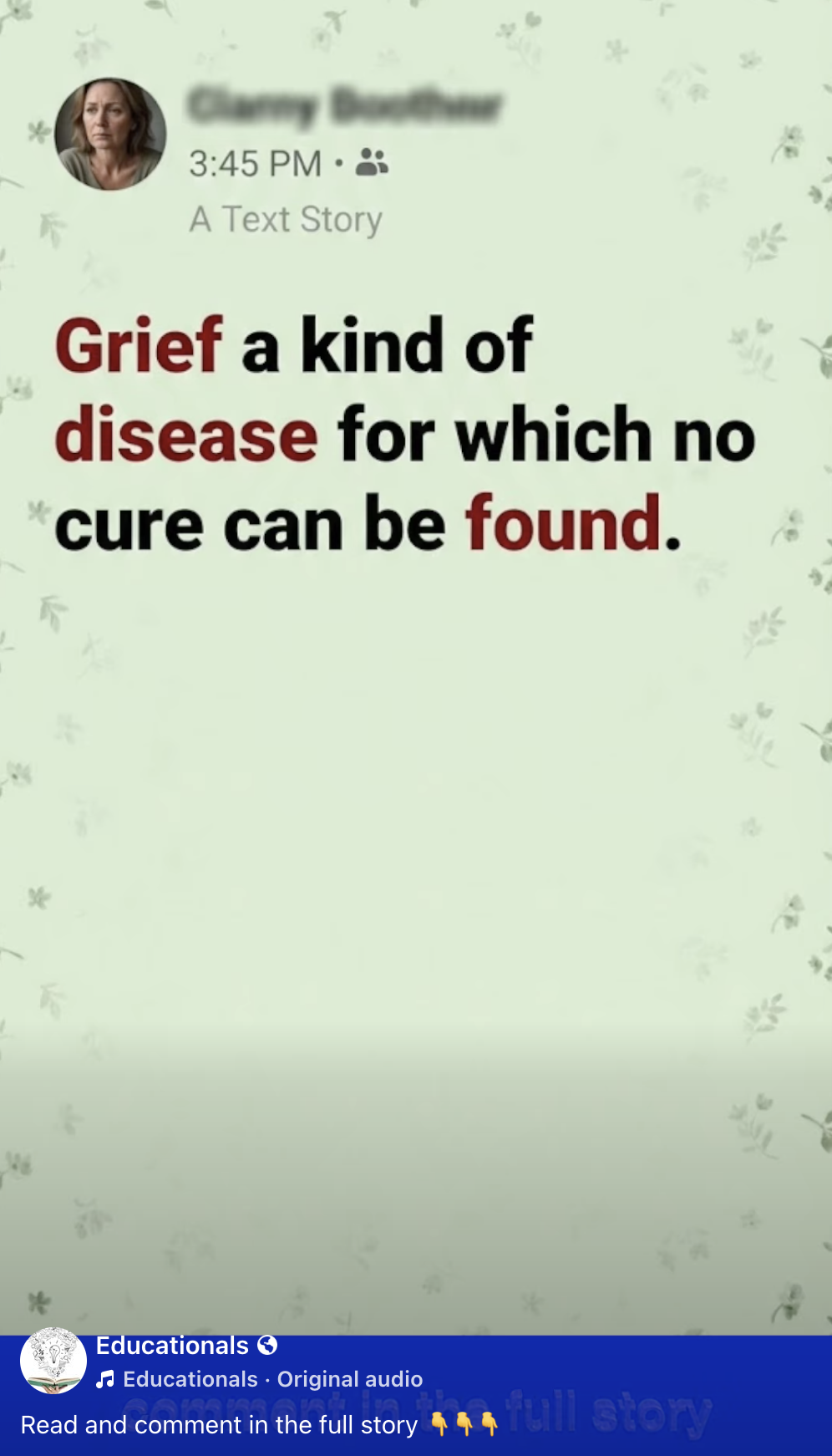
“Stop fighting it,” the letter continued. “You can’t fix this. You can’t meditate it away. I read a quote once that stuck with me: Grief is a kind of disease for which no cure can be found. And that’s okay. The pain means it was real. The pain means I mattered. Don’t try to cure it. Just let it live with you. Make room for it. Don’t let anyone tell you to ‘get over’ me. I love you, forever.”
I sat there for hours as the rain hit the window. For the first time in six months, I didn’t try to push the sadness away or force a smile. I didn’t try to “cure” myself.
I realized the grief wasn’t a sickness destroying me; it was simply all the love I still had for him, with nowhere left to go. And I decided, right then, that I would carry it for the rest of my life.