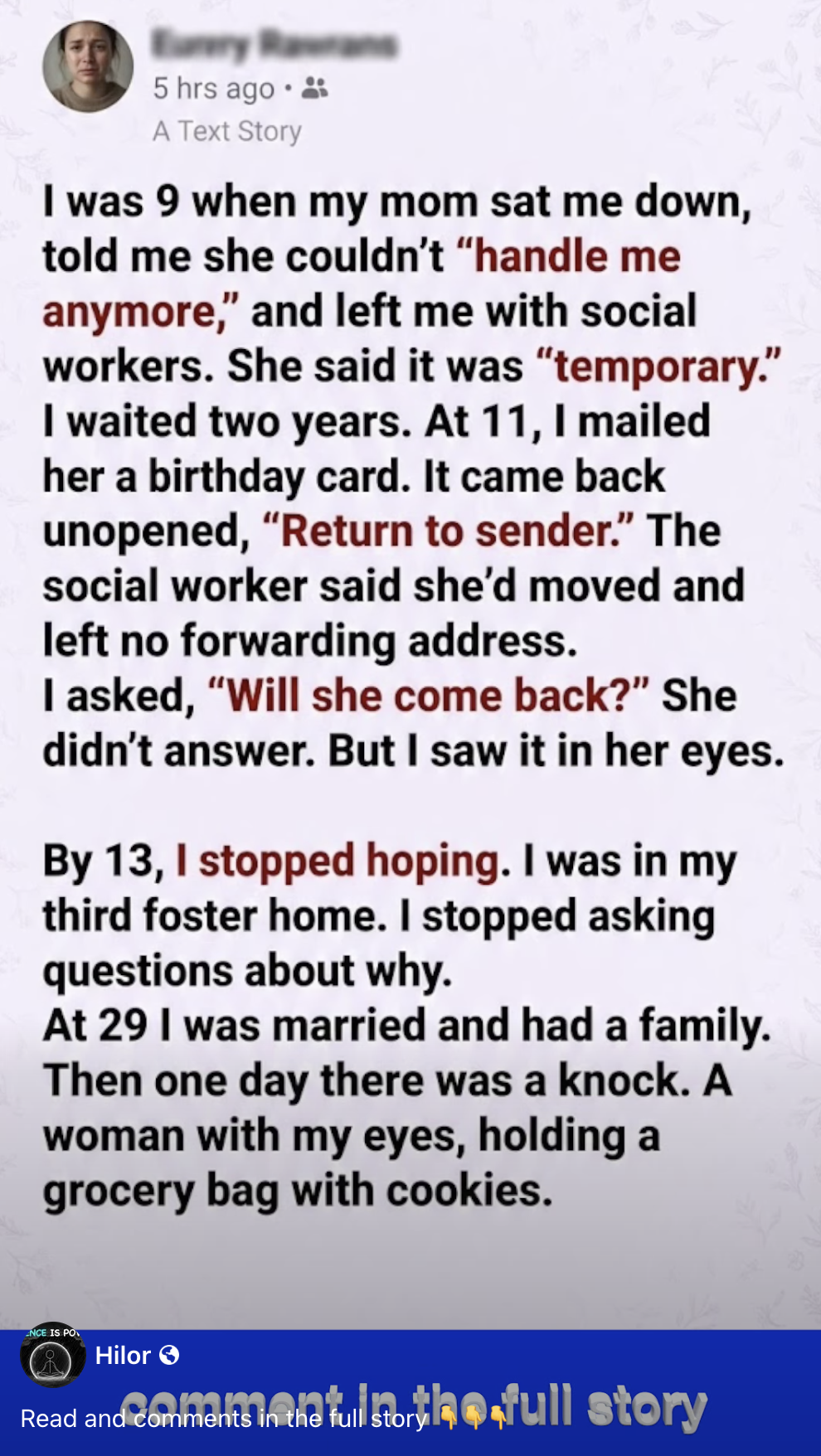
I was 9 when my mom sat me down, told me she couldn’t “handle me anymore,” and left me with social workers. There was no hug, no tears on her end. She just dropped me off like a library book she didn’t want to pay the late fee for. She said it was “temporary.”
I believed her. I waited two years. I sat by the window of the group home every single day. At 11, I mailed her a birthday card. It came back unopened, “Return to sender.” That red stamp hurt more than the initial goodbye. The social worker said she’d moved and left no forwarding address.
I asked, “Will she come back?” She didn’t answer. But I saw it in her eyes. The pity. The silence. That was the moment my childhood actually ended.
By 13, I stopped hoping. I hardened my heart. I was in my third foster home. I stopped asking questions about why. I focused on surviving. I got good grades, went to college, and built a life from scratch.
At 29 I was married and had a family. I finally had the home I always wanted—one that I built myself, full of love and stability.
Then one day there was a knock. I opened the door, balancing my toddler on my hip.
A woman with my eyes stood there. She was older, grayer, but undeniably her. She was holding a grocery bag with cookies.
“Hi, sweetie,” she said, her voice trembling slightly. “I brought oatmeal raisin. Your favorite.”
My favorite? I haven’t liked oatmeal raisin since I was eight.
“What are you doing here?” I asked, my voice cold. I didn’t invite her in.
“I… I just wanted to see you,” she said, smiling nervously. “I wanted to meet my grandbaby. I know I’ve been gone a while, but I’m ready to be a grandma now.”
“Gone a while?” I laughed, a sharp, bitter sound. “You’ve been gone for twenty years. You left me in the system.”
“I was young! I was overwhelmed!” she pleaded. “But I’m here now. Family helps family, right?”
Then I noticed it. The yellow tint in her eyes. The slight tremor in her hands. The way she leaned against the doorframe for support.
“Why are you really here?” I demanded.
She crumbled. “I’m sick,” she whispered. “My liver… it’s failing. I have no one else. I need a match for a transplant, or at least someone to help me recover. I thought… since I gave you life…”
“You didn’t give me a life,” I cut her off. “I built this life despite you.”
I looked at the bag of cheap cookies in her hand—the price she thought was enough to buy back twenty years of abandonment and a kidney.
“I can’t handle this right now,” I said, using the exact words she said to me when I was nine. “And this visit isn’t temporary. It’s over.”
I closed the door. I didn’t take the cookies. I hugged my daughter tight, knowing I would never, ever make her wonder if I was coming back.