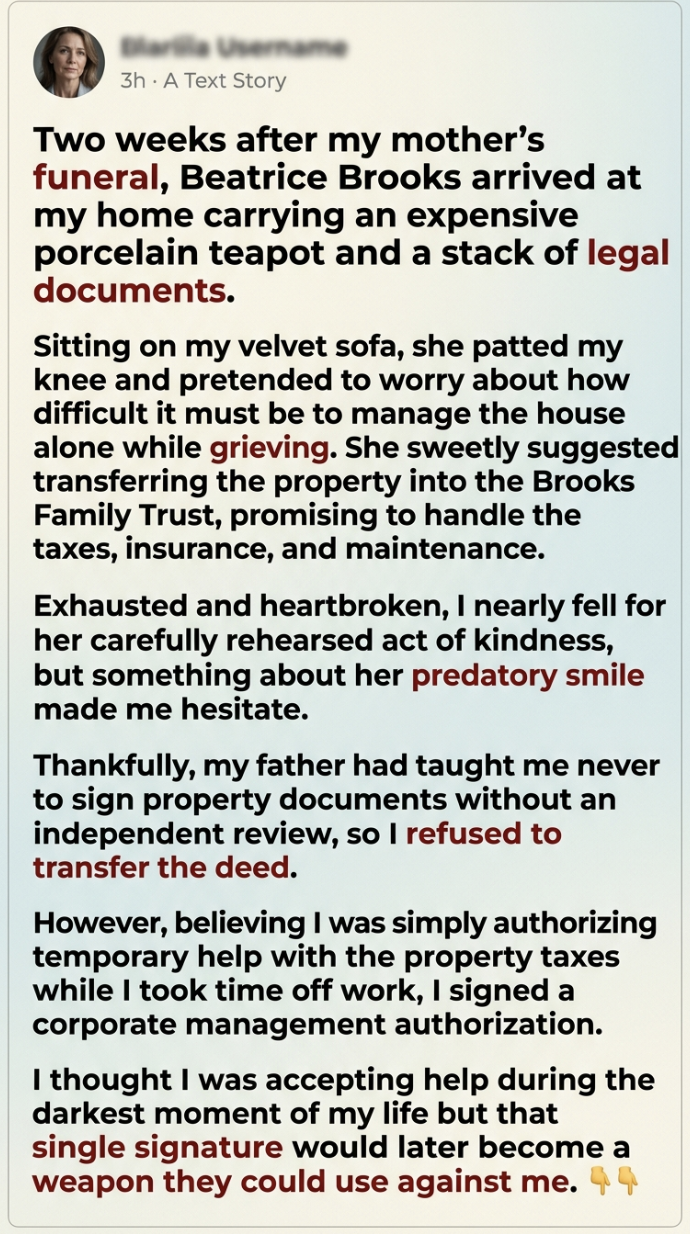
Two weeks after my mother’s funeral, Beatrice Brooks arrived at my home carrying an expensive porcelain teapot and a thick stack of legal documents.
She settled onto my velvet sofa, patted my knee, and gave me a look of practiced sympathy.
“Oh, darling,” she whispered. “Managing this enormous house alone while grieving must be unbearable. You shouldn’t have to worry about taxes, insurance, or maintenance right now. Let Richard and me take care of everything.”
She proposed transferring the property into the Brooks Family Trust, promising to handle every expense and spare me the burden of managing the estate.
I was exhausted, heartbroken, and barely sleeping. For a moment, her offer sounded like the kindness I desperately needed.
Then I noticed her smile.
It wasn’t warm. It was the smile of someone who already believed she had won.
My father had taught me one rule about property: Never sign what you don’t fully understand, especially when someone insists they’re only trying to help.
So I refused to transfer the deed.
Beatrice didn’t argue. Instead, she calmly slid another document across the table and explained that it was merely a corporate management authorization, allowing temporary assistance with the property taxes while I took time off work.
I read the first page, but grief had left my mind foggy, and I trusted her more than I should have. Believing I was authorizing routine administrative help, I signed.
Beatrice gathered the papers, kissed my cheek, and thanked me for trusting her.
At the door, she turned back with one final smile.
“You’ve made the right decision, darling. Your mother would have wanted you to have someone looking after you.”
After she left, I returned to my mother’s bedroom and sat on the edge of her bed, holding the sweater she’d worn during her final winter.
I thought the hardest part of that day was missing her.
I was wrong.
Five months later, I would discover that the document I had signed contained powers I had never knowingly agreed to grant. My name was being used in communications about the property, and decisions were being discussed as though I had surrendered control.
The woman who had arrived with tea, sympathy, and promises of help had turned my moment of vulnerability into an opportunity.
And the signature I had given her in good faith was about to become a weapon against me.
I had refused to hand over the deed.
But I hadn’t yet understood how much damage one seemingly harmless signature could do.