On paper, the intention is noble. It is built on sacrifice, selflessness, and a profound desire to protect children from the pain of a broken home. Parents who choose to “stay together for the kids” often endure years of emotional distance, lingering resentment, and silent unhappiness, believing they are placing their children’s well-being above their own.
However, decades of psychological research and family sociology reveal a sobering counter-intuitive reality: children do not internalize a marriage based on its legal status, but on its emotional climate.
When parents stay in a broken, high-conflict, or emotionally dead marriage, the sacrifice frequently produces the exact opposite of its intended goal—inflicting subtle, long-term psychological harm on the very children it was meant to shield.
1. Kids Are “Emotional Barometers,” Not Fools
Parents often believe they can hide their marital dysfunction behind closed doors or under a veneer of civil politeness. In reality, children possess an acute sensory system for home atmosphere.
-
Micro-Expressions & Tone: Children process non-verbal cues—a sharp sigh, stiff body language, missed eye contact, or forced laughter—far more intensely than adults realize.
-
The “Cold War” Effect: Even in homes without shouting matches, chronic coldness and low-grade tension keep a child’s nervous system on high alert. The atmosphere is filled with unspoken strain, leaving children feeling continuously unsettled without understanding why.
Key Takeaway: A child living under constant, subtle tension lives in a state of chronic hyper-vigilance. The lack of open conflict does not equal peace; it often just feels like waiting for an explosion.
2. It Distorts Their Blueprint for Healthy Relationships
Children do not learn what love is from lectures or school lessons; they learn it by observing how their primary caregivers treat each other. The relationship between parents becomes the default template for the child’s future romantic choices.
When parents stay in a hollow or toxic marriage, they inadvertently teach their children harmful relationship norms:
[ Cold / Hostile Marriage ] ──> [ Normalizes Emotional Misery ] ──> [ Child Replicates Dynamic in Adulthood ]
-
Normalizing Emotional Neglect: Children raised by parents who merely co-exist learn that marriage means living like distant roommates—without affection, warmth, or genuine companionship.
-
Accepting Dysfunction: If parents endure hostility or emotional abuse, children absorb the belief that love requires accepting mistreatment or sacrificing one’s core happiness to maintain a status quo.
3. The Heavy Burden of “You Kept Us Suffering”
When parents sacrifice their personal lives “for the kids,” an invisible debt is created. As children grow into adolescence and adulthood, this self-sacrificing narrative can turn into an overwhelming burden of guilt.
When children eventually discover—or are directly told—that their parents stayed unhappy because of them, it often triggers profound emotional distress:
-
Internalized Guilt: The child carries the weight of believing they were the root cause of two adults’ long-term misery.
-
Resentment Over Inaction: Many adult children of divorced parents express relief after a split, noting that the separation finally allowed the household tension to dissipate. Learning that parents stayed out of obligation can lead to feelings of frustration rather than gratitude.
4. The Biological Impact of Chronic Household Stress
Developmental psychology demonstrates that chronic marital conflict—whether explosive or cold and passive-aggressive—directly impacts a child’s brain development and physiological health.
Long-Term Marital Strain ──> Elevated Cortisol ──> Anxiety, Sleep Issues, Behavioral Challenges
| Environment | Impact on Child’s Nervous System | Long-Term Psychological Effect |
| High-Conflict / Cold Home | Elevated stress hormones (Cortisol) | Anxiety, depression, emotional dysregulation |
| Peaceful Single-Parent Home | Stable, predictable environment | Higher emotional resilience, secure attachments |
Studies consistently show that children fare significantly better in a peaceful, supportive single-parent household or co-parenting environment than in a multi-parent home characterized by persistent tension, disdain, or indifference.
5. Transitioning from “Staying Together” to “Co-Parenting Well”
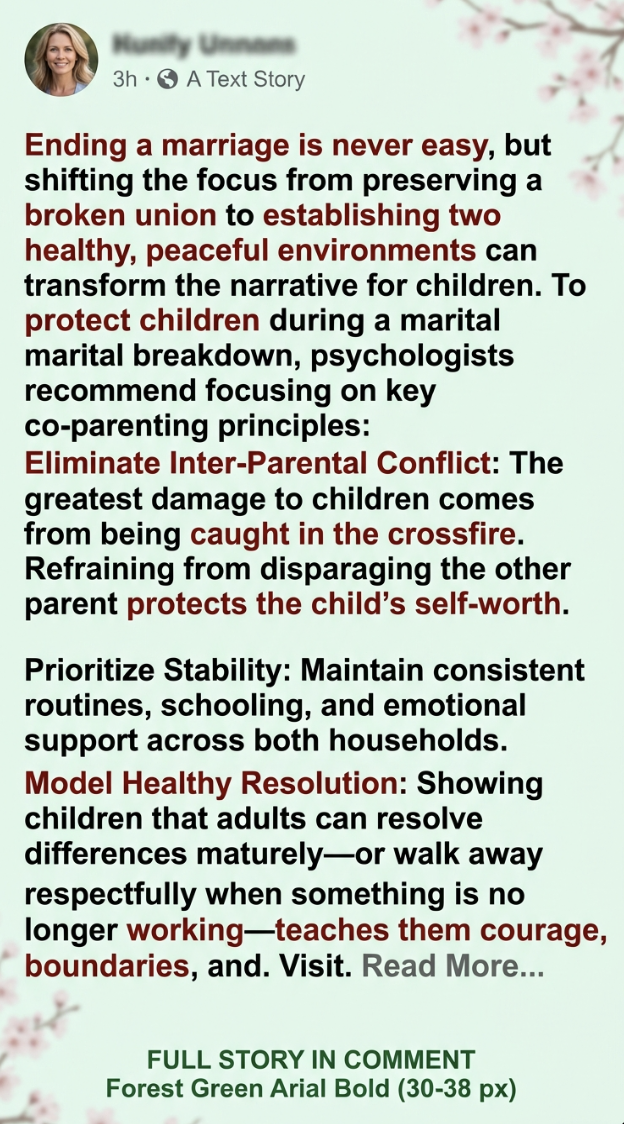
Ending a marriage is never easy, but shifting the focus from preserving a broken union to establishing two healthy, peaceful environments can transform the narrative for children.
To protect children during a marital breakdown, psychologists recommend focusing on key co-parenting principles:
-
Eliminate Inter-Parental Conflict: The greatest damage to children comes from being caught in the crossfire. Refraining from disparaging the other parent protects the child’s self-worth.
-
Prioritize Stability: Maintain consistent routines, schooling, and emotional support across both households.
-
Model Healthy Resolution: Showing children that adults can resolve differences maturely—or walk away respectfully when something is no longer working—teaches them courage, boundaries, and self-respect.
The True Gift to a Child
Children do not need their parents to be married; they need their parents to be well.
Choosing to live authentically, prioritize emotional health, and cultivate a peaceful environment—even if it means living in separate homes—models a vital life lesson: that happiness, safety, and self-respect are worth standing up for.